My head is under a hydraulic press. My shoulders hurt from carrying the weight of the world. My body feels borrowed and unfamiliar. I am never fully present at any moment, constantly distracted by this unbearable discomfort.
I am well aware that I’ve had enough sleep. I’ve eaten enough, and have had plenty of water. Still, I feel unwell. Something’s wrong with me. As a self-proclaimed non-whiner, I could either accept that this is how I’ll feel from now until eternity, or go see her.
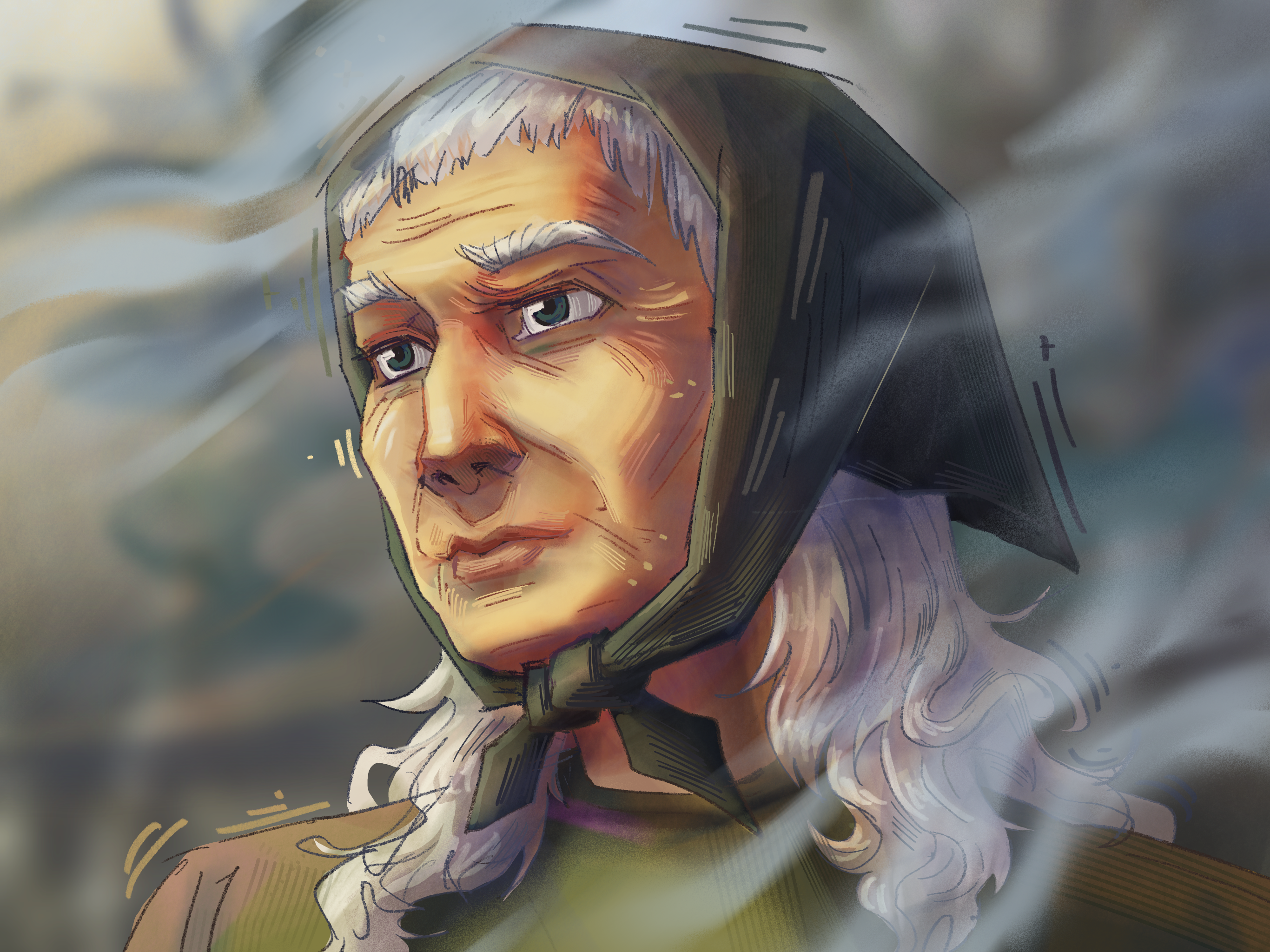
She mixes coarse salt with cold water and gently spreads it on my forehead before she begins her ritual. As she mumbles something under her breath, she lets out a long and uncontrollable yawn – first of many. She continues to whisper in between the yawns. Her cheeks turn red while her eyes fill up with tears. The yawns start getting longer and louder. After a while, she stops.
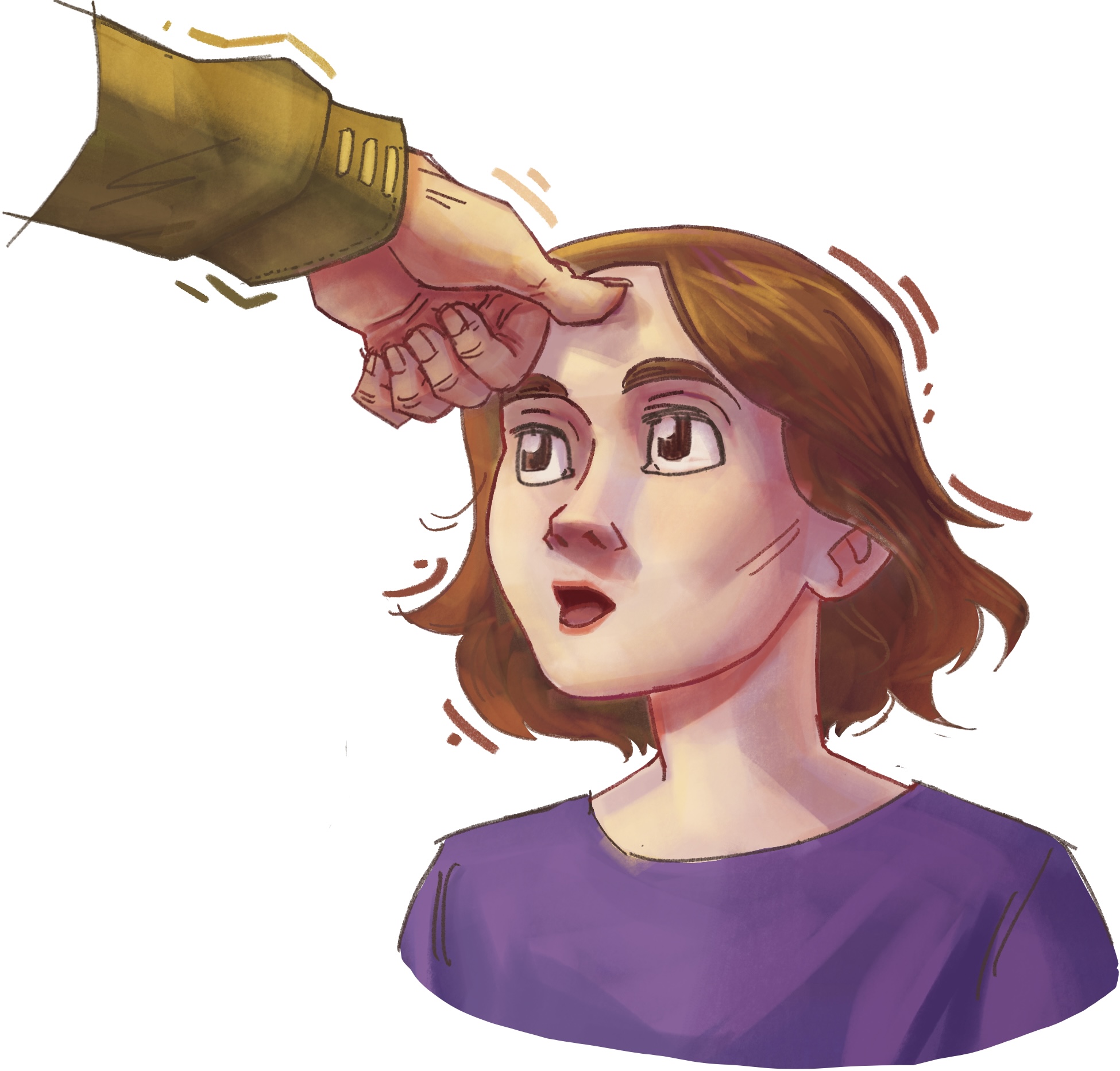
She goes on and on about how my saints and guardians never protect me from evil. Her solution to this dilemma is that I should always wear my underwear inside-out. I don’t ask questions. I just do as she says. I always end up feeling better afterwards. For the majority of my life, I thought it was a placebo. Now I’m not so sure.
My grandmother, Divna, learned about pagan and Slavic healing rituals from her cousin, Divna, who learned them from her grandmother (perhaps also Divna?). My mother and aunt learned it from her, and so did my sister. It just so happened that I never got the memo. Yesterday I called her and asked why she never taught me how to do it, but she taught my sister. She said, “ Well, I don’t know, you didn’t really seem interested.” But I was interested. I am interested.
The rules of learning the rituals, according to my grandmother, vary from region to region. In the general Eastern region of North Macedonia, more particularly, in her village, Dzvegor, it is crucial that these rituals are taught by a relative before the young girls get their first period. Or it can be done after menopause. The most important step is that it is done in secret. Nobody should speak about the rituals or what is being whispered during them. Although I know that this secrecy was most likely for keeping the rituals special and sacred, another possible reason for this could be keeping me out of the loop.
Trying to explain something that is such a big part of my life and my culture to someone outside the Balkans is always interesting. I get a different reaction almost every time, but I always get asked if I am a witch. Deep down inside, I really wish I was. Not a witch per se, but a part of this community, its rituals, and history.
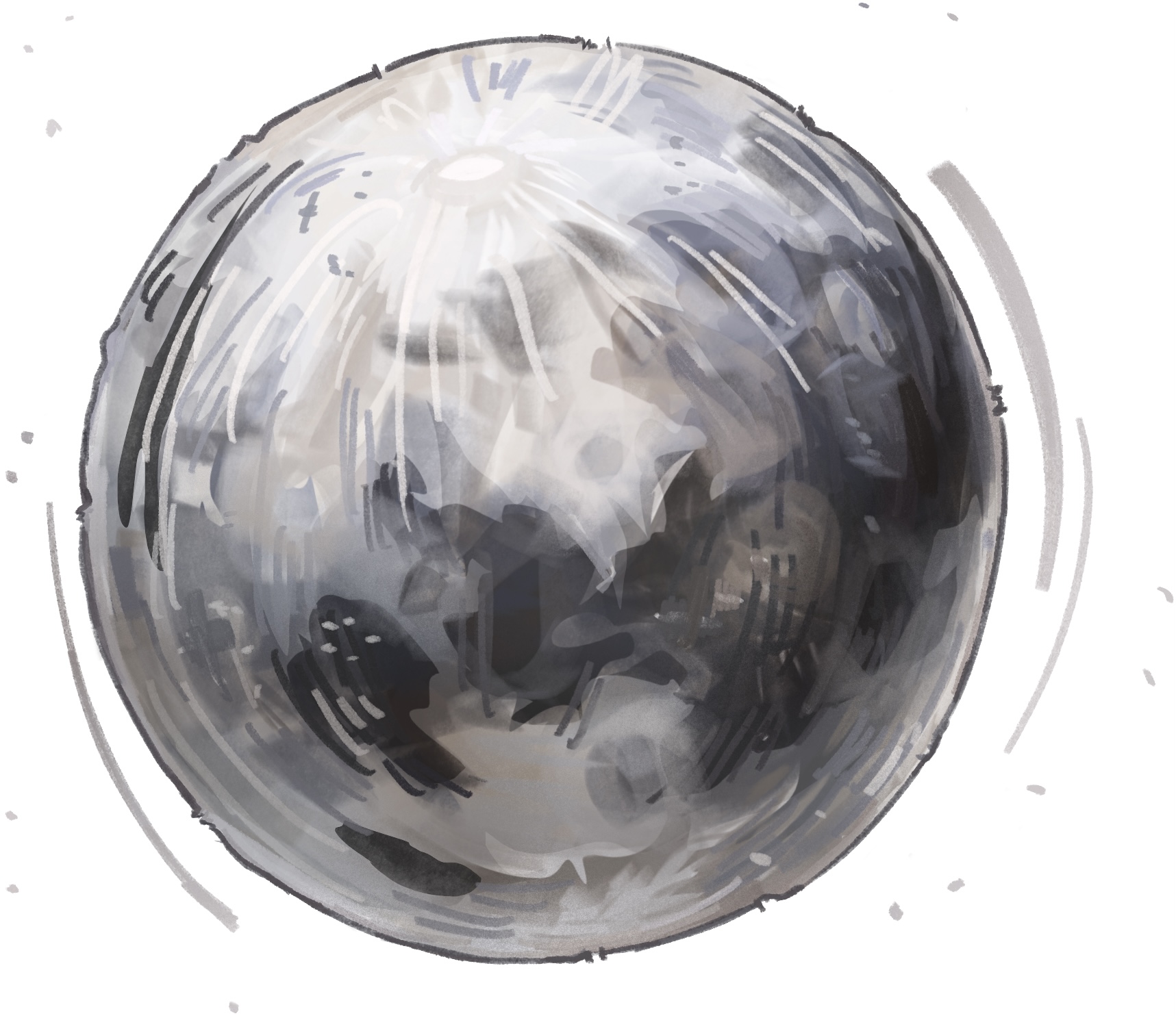
I wish I knew their secret language, or what the significance of salt is, or why they are always using water. I wish I knew why some of them use the moon cycle and how that is related to anything, really? I wish I knew if they take people's pains away and whether it aches their body instead. I wish I knew how to calm people down and take away their troubles, or at least make them believe that I can.
In my particular case, due to the failure of my saints, my baba says that I have a lot of urotsi, her specialty. The closest concept to this would be the evil eye, or the fear of envy. Except that instead of an eye-shaped talisman, or the so-called nazar, we have a spiritual protector, a saint. Many Balkans claim that people with blue eyes tend to spread urotsi, perhaps it is somehow connected with the evil eye? In fairness, anyone can spread them. In some cases, even calling a newborn cute holds the grave danger of giving them urotsi. In that situation, all you need to do is… spit on them three times.
Helpful things superstitious people do to avoid urotsi, as suggested by my baba, are wearing their undergarments upside-down, making a small invisible hole in their clothes, and even wearing different socks. In other regions, these healers use lead or wax to get rid of evil energy. Unfortunately, we come from the poorer villages, where people add rice to moussaka when they do not have enough meat, so salt and water had to be good enough to ‘break the spell.’
Most people’s first time visiting a pagan healer is during infancy. If a baby cries too much, parents are strongly advised to take their baby to a healer, where a ritual involving matches is performed. Healers light up three matches one by one and then douse them in a cup of water while saying their secretive whispers. Then they throw away the water far from their house.
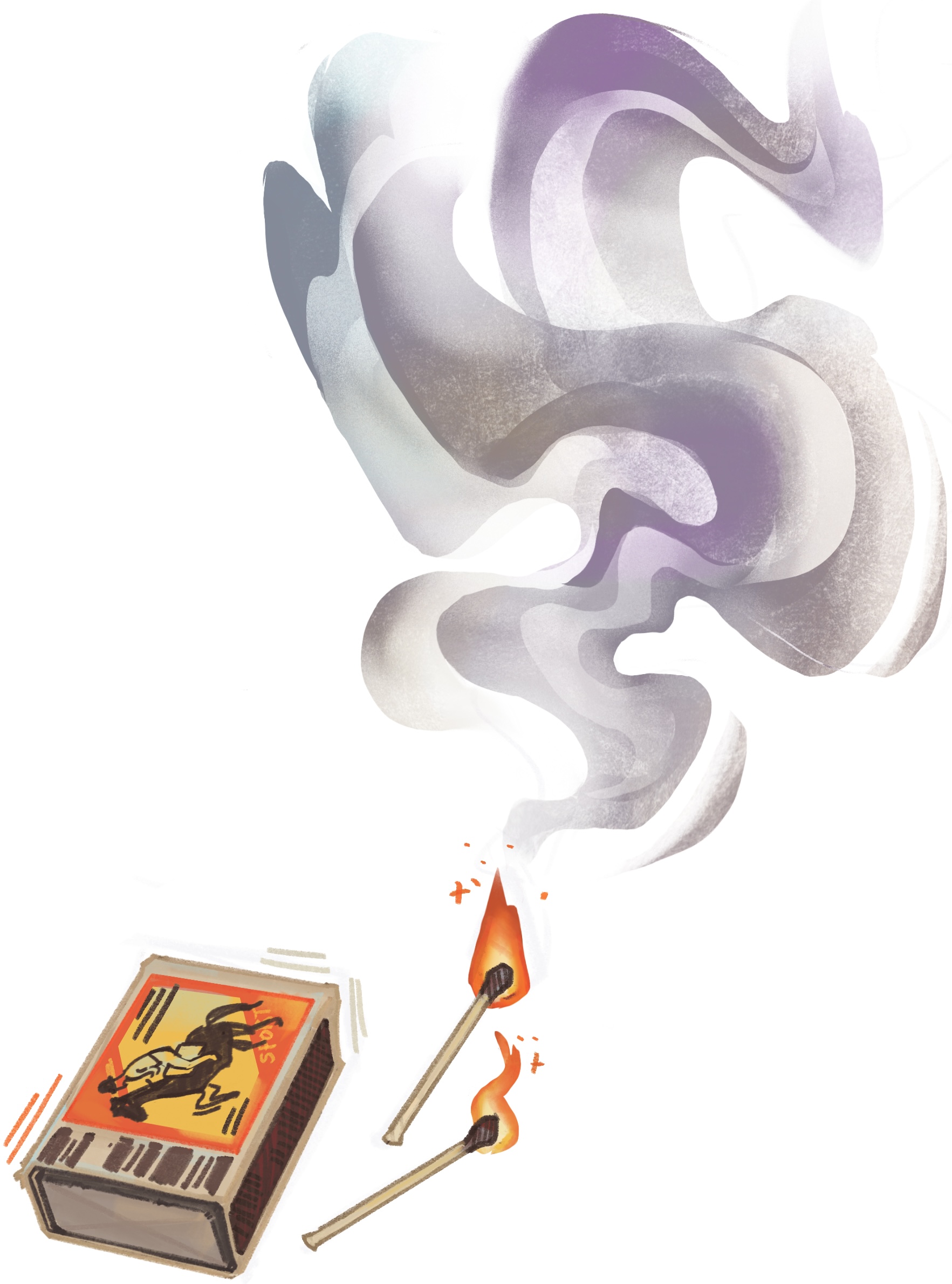
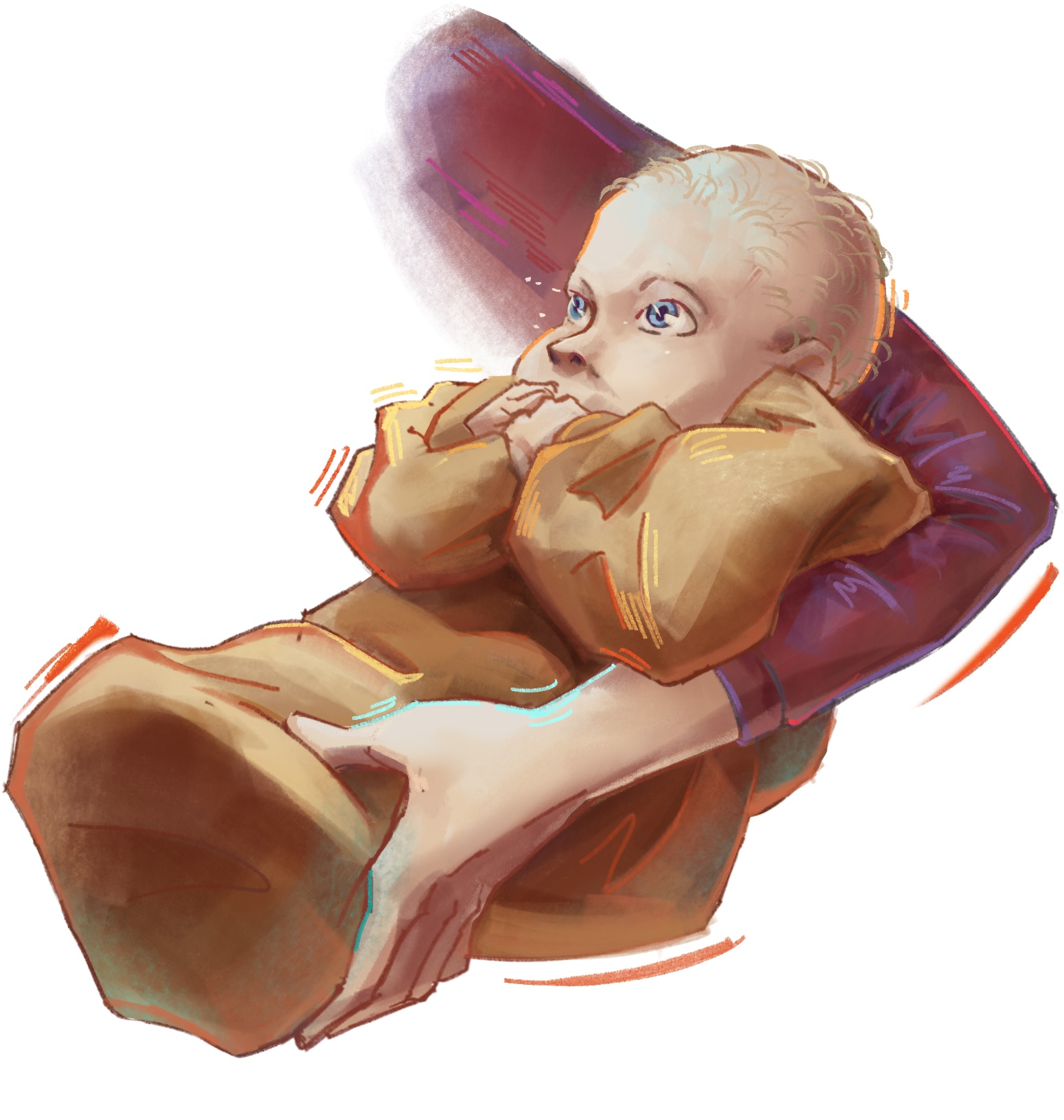
After an insightful conversation with a couple who was blessed enough to have a brand new screaming baby in their household, they assured me that this spell works incredibly well. Surely a baby doesn’t know about placebos?
Growing up, I never truly believed in these rituals. I liked watching the Magic School Bus and finding out fun facts and logical processes, like how rain forms, or how plants create their own food. Later I read about things like placebo effects, confirmation biases, and other psychological explanations about things that seemed like magic. And yet, every time one of these rituals was performed on me, I felt relieved. I felt lighter. I felt like something in me shifted. Every time one of these healers stopped yawning, the pressure in my temples eased, and my shoulders relaxed. No matter how much I claim that it is all made up, I feel my cynicism fade away each time.
But maybe it doesn’t matter if I believe it or not. Maybe what matters is the act of giving away your discomfort to someone who has spent decades believing they can carry it for you.
***
I still remember her. I remember when I went to her house for the first time as a child. Her name was Mladena. She had a small cottage in the middle of Dzvegor, right by the road connecting North Macedonia and Bulgaria. She was an icon in the village. People from all around the country used to visit her, she was even on the news once!
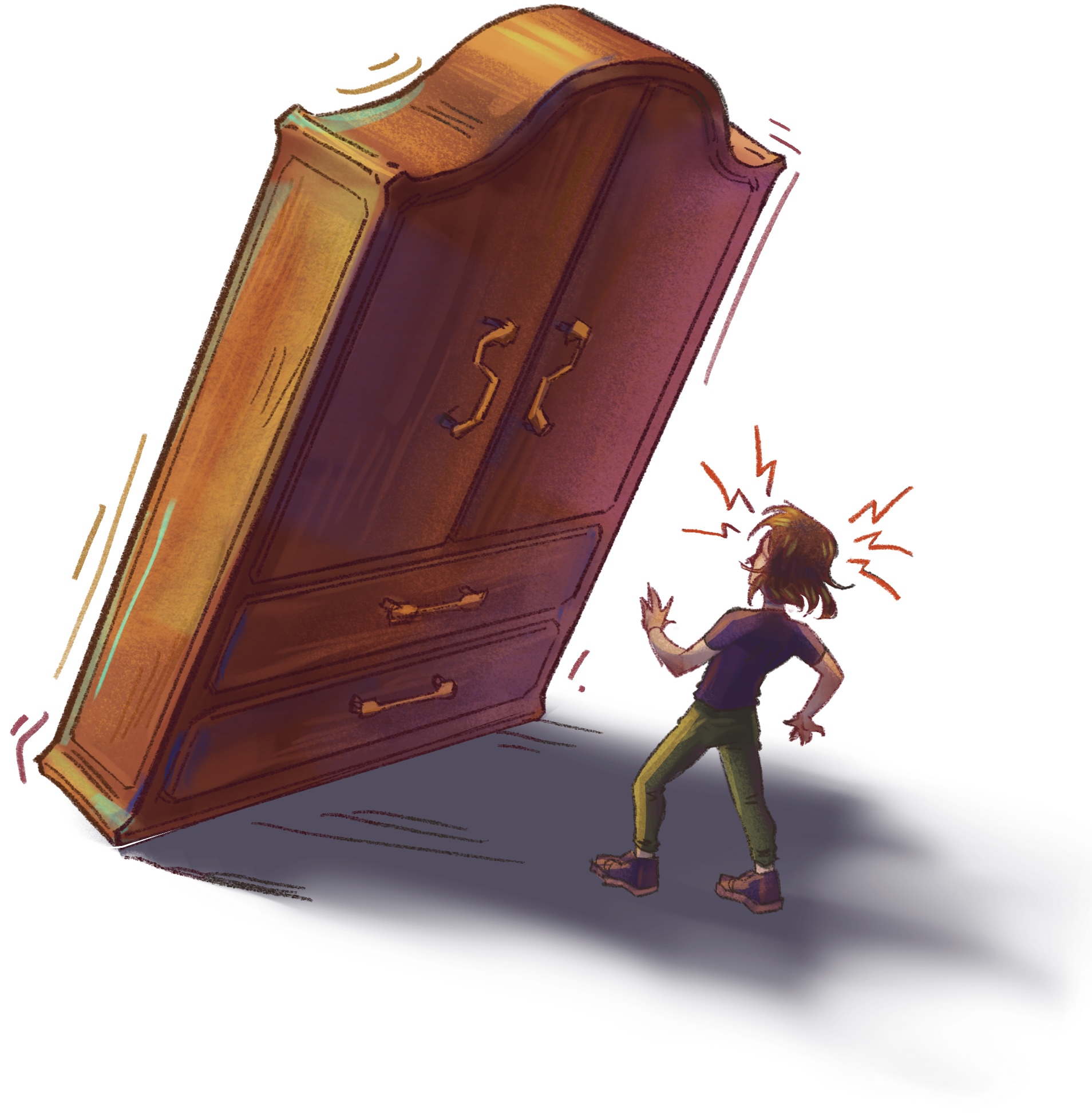
My parents took me to her because her specialty was healing from uplah: she was able to heal the fear people experienced and calm them down. We paid her a visit one hot summer night after an incident involving a wooden armoire filled with heavy blankets and the mysterious way it happened to fall directly on top of me.
Mladena had a plastic chair right by her door, where she would sit, people-watch, and greet passersby. I remember being scared. Scared of her walls, which were peeling, and her heavy door that had mysterious scratches all over. The inside had only one room. The floor was wooden and rough. Sunlight struggled to get in, so it was pretty dark. Once inside, the first thing that greeted me was the smell of the basement interlocked with iron-heavy scents. I was practically shaking at this point. The thing I was scared of the most, however, was the fury of my strict Balkan mother, so I behaved.
She opened up her rusted wood-stove and put an old horseshoe into the flames with her long iron tongs, while whispering something under her breath. The burning wood inside kept crackling and popping as she put some salt on my forehead after filling up a large steel pot with water.
She never stopped her secret whispers as she took out the bright red horseshoe and gently placed it inside the pot. I still remember the sound of the hot horseshoe screaming and hissing as it fell to the bottom of the pot. She gently pulled me in and asked me to inhale all of the fumes that came from the pot, and continued to whisper. The metal smell was so strong I could taste it. The fumes were practically forcing tears from my eyes, and baba Mladena couldn’t stop yawning. May she rest in peace.
There are plenty of these healers in our region and in our community. Each one of them is always ready to help as much as they can, especially during traumatic events. I have visited these healers – each one specializing in different rituals – every time something significant or bad has happened to me. After a minor car crash, after a small fall, even after a particularly horrible depressive episode. And every time I come out feeling at least a little bit better.
Most of the concerns for which people seek such help are mental or psychological. These women don’t just help with physical pain, but they have also served as counselors, in their own special way, even before therapy was a thing in this region. The rituals against uplah can be connected to easing people’s fears, anxieties, and even helping them process traumatic events. The ritual was just a part of the healing. The rest came from being listened to, and being told that what was weighing on you could be removed. All of this was happening in communities where suppressing emotional vulnerability was the norm, which made me love this tradition even more!
These women truly care about their communities. For them, it is strictly forbidden to have a set price for their services. Instead, people are encouraged to pay whatever they can afford at the time. This keeps the practices inclusive and accessible to everyone. The procedure is the same no matter if they are getting paid in gold or potatoes. It’s also a way for these women to gain their own personal source of income, which isn’t a common practice, even in recent North Macedonian or Balkan history.
***
According to my grandma, the main reason there are so many of these healers probably has something to do with the fact that the region was part of the Ottoman Empire for five centuries. After some digging around, I found out that different variations of these practices exist and are present throughout the Balkans and date back to ancient times, connecting pagan rituals, herbalism, and spirituality.
The fact that these little spells have stood the test of time is fascinating. I wonder if they are the same now as they were back then? Are they always the same words each time, or are the healers allowed to freestyle? Does it have something to do with energy? The universe? What are they healing us from?
The curious thing is that the practices survived communism too, when Macedonia was part of Yugoslavia – in fact, they flourished during that period. Although Josip Broz Tito, Yugoslavia’s long-time communist leader, didn’t explicitly ban religion, he was firmly against it and constantly pushed for an atheist state. Regardless, people who went to church were constantly surveilled, and their actions were frowned upon.
This tension around religion led people who needed to believe in something to look for a new outlet. This was particularly resonant with uneducated people from rural areas, such as my grandmother, who never finished middle school. The absence of organized religion allowed old pagan practices to spread.
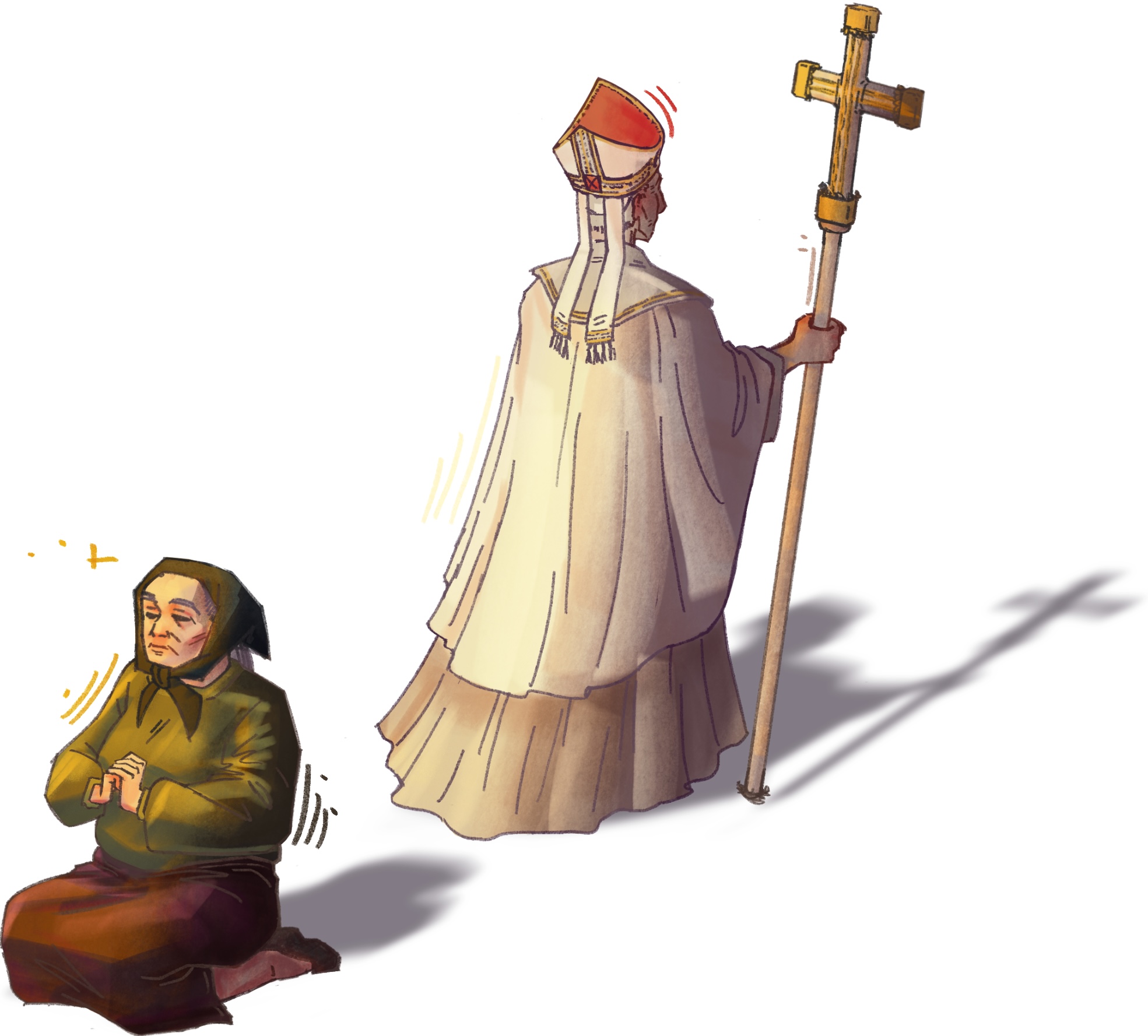
When something unexplainable happened, and they couldn’t pray for everything to be okay, the next best thing was to go to a healer. Even if they might not possess any actual ‘healing powers,’ they still gave the general public at least some peace of mind.
Strangely, Tito wasn’t completely against these healers like he was against the church, or so the story goes. A famous legend had spread throughout Yugoslavia that Tito himself used to visit these healers and ask for all the bad energy to be removed, though this information is purely speculative.
The more I think about it, the more I realize why these traditions survived for centuries. The Balkans were always a hotspot for instability, wars, occupations, and economic hardships. All of these moments were examples of how formal institutions fail the ordinary person over and over. In times when governments collapse, healthcare is inaccessible, and religion is heavily politicized, I can see how people would turn back to tradition. Back to something their grandmother’s grandmother used to do.
With all that said, I do not believe these rituals are a good substitute for medicine or a proper therapist. I do not believe these things can be substituted. I do, however, think that it is an incredibly impressive tradition, and an accessible option for people who need something to believe in.
What makes me truly sad today is the ever-resurging trend that comes back over and over to everyone’s feeds: spirituality and its plethora of different forms. Whether it is an Etsy witch selling a spell that makes your ex-boyfriend gain 20kg, or an astrologist offering to make your birth chart for $19.99, or maybe it is the bald guy that has a booth next to the gay bar that claims he can ‘cleanse your aura’ using … bioenergy? … whatever that is. Some newer pagan healers have also tried to sell their services, even hold courses on some of their rituals. Personally, I only trust my local grandmas.
What is truly incredible is that the majority of the people in our community still seek their help, even after the resurgence of religion, after the evolution of medicine, after therapists, after each grandma got on Facebook, and after everyone started asking ChatGPT what to eat for breakfast. For some reason, they still take their kid to their closest healer when it cries too much, they still go to get rid of the bad energy and the gossip after they have embarrassed themselves at a wedding, after suffering a traumatic event, when their wound won’t heal, or even when they struggle with infertility.
Despite the fact that I am unable to help or heal people like them, I find the entire process fascinating. I’m not quite sure if it is magic, nor if it is real or fake, but what I am sure about is that it is part of who I am. It is part of my culture and my history. As my grandma whispers to me over the camera on her phone, I sit and I observe how a few unknown sentences can make her tear up, turn red, and yawn my pain away.